
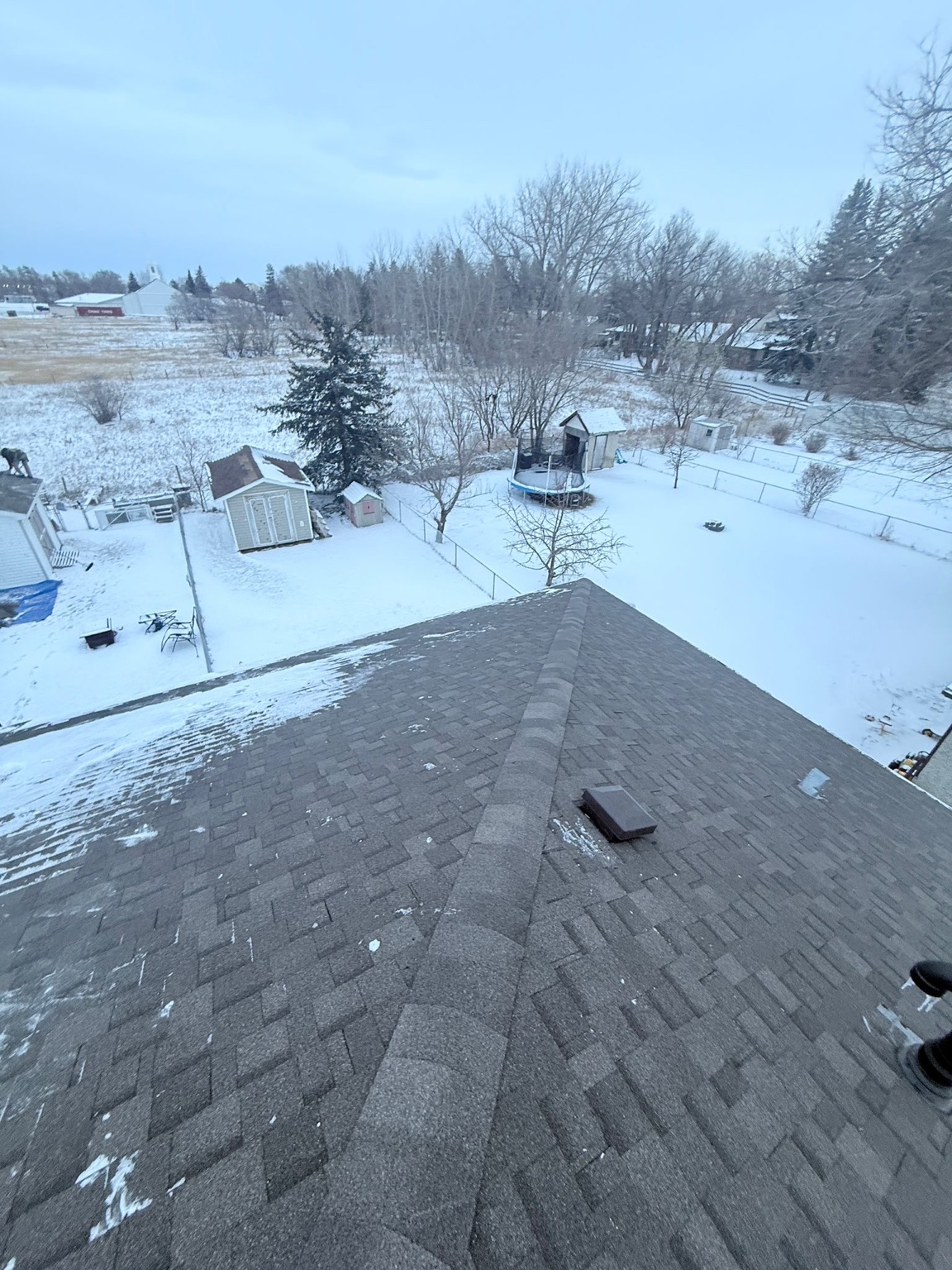
When winter arrives in Alberta, many homeowners assume that roofing work must stop until spring. But what happens when your roof starts leaking, shingles blow off during a windstorm, or your existing roofing system can no longer protect your home?
Waiting several months is not always the best solution.
Asphalt shingle roof replacements can be completed during the winter when suitable conditions exist and proper cold-weather installation procedures are followed.
The difference lies in the preparation, materials, workmanship and attention given to every detail.
Is it too cold to replace a roof in Alberta?
There is no single outdoor temperature that determines whether every asphalt shingle roofing system can be installed safely and correctly.
IKO acknowledges that shingles can be installed throughout the year with additional cold-weather precautions. Malarkey also publishes technical guidance specifically addressing asphalt shingle installation below 4°C.
However, a responsible roofing contractor must consider more than the temperature displayed on a weather app.
Important considerations include:
- Current and upcoming weather conditions.
- Roof surface temperature.
- Wind speed and exposure.
- Snow, frost and ice accumulation.
- Shingle flexibility.
- Underlayment and adhesive application requirements.
- Available sunlight.
- Safe working conditions.
A sunny winter afternoon in Calgary may offer different installation conditions from an overcast, windy day at the same temperature in Edmonton.
1. Proper storage and handling of roofing materials
Asphalt shingles become less flexible as temperatures decrease. Cold shingles are more susceptible to cracking and damage during transportation, handling and installation.
IKO's Residential Information Bulletin R-52 identifies temperatures of 10°C and below as conditions requiring additional handling precautions.
Malarkey also recommends keeping roofing materials warm before installation, particularly asphalt-based underlayments and hip and ridge shingles.
Proper winter material preparation includes:
- Storing materials in a protected, appropriately heated environment.
- Keeping shingle bundles on level surfaces.
- Avoiding unnecessary bending or impact.
- Allowing cold materials to regain sufficient flexibility.
- Inspecting shingles for damage before installation.
Proper material handling helps protect the integrity of your new roof before the first nail is installed.
2. A clean, dry and secure roof deck
Quality roofing begins with the surface beneath the shingles.
Installing roofing materials over wet, icy or frost-covered decking can create adhesion problems, compromise installation quality and expose workers to serious safety hazards.
The Alberta Roofing Contractors Association's steep-slope roofing standards emphasize suitable deck conditions and the repair of deteriorated decking before replacement.
During winter roof replacement, particular attention should be given to:
- Removing existing roofing materials.
- Inspecting plywood and OSB roof sheathing.
- Identifying damaged or deteriorated decking.
- Ensuring the substrate is suitable for the selected roofing system.
- Keeping exposed roof sections protected from precipitation.
Winter is not a reason to overlook damaged decking or conceal existing problems beneath new shingles.
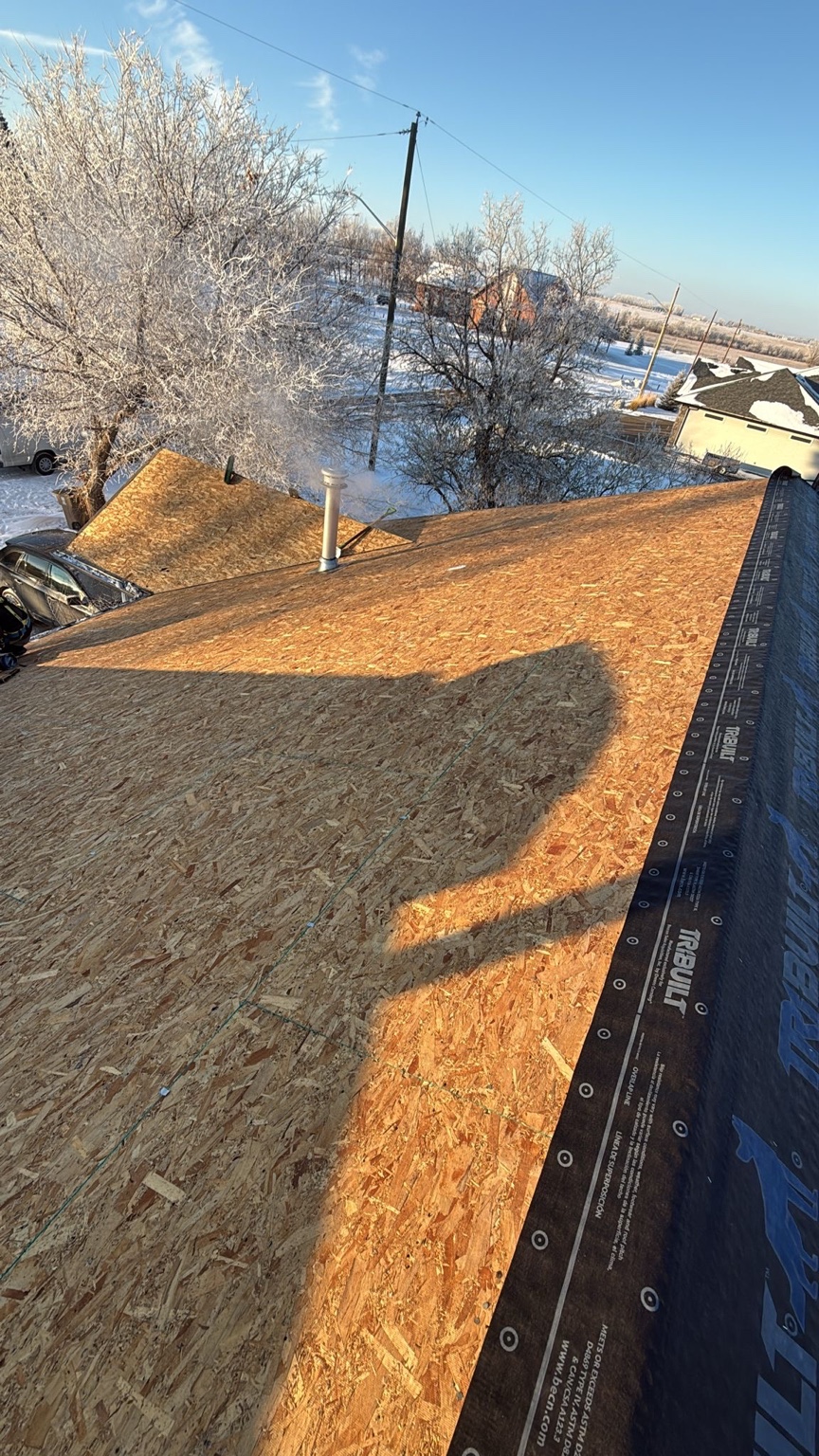
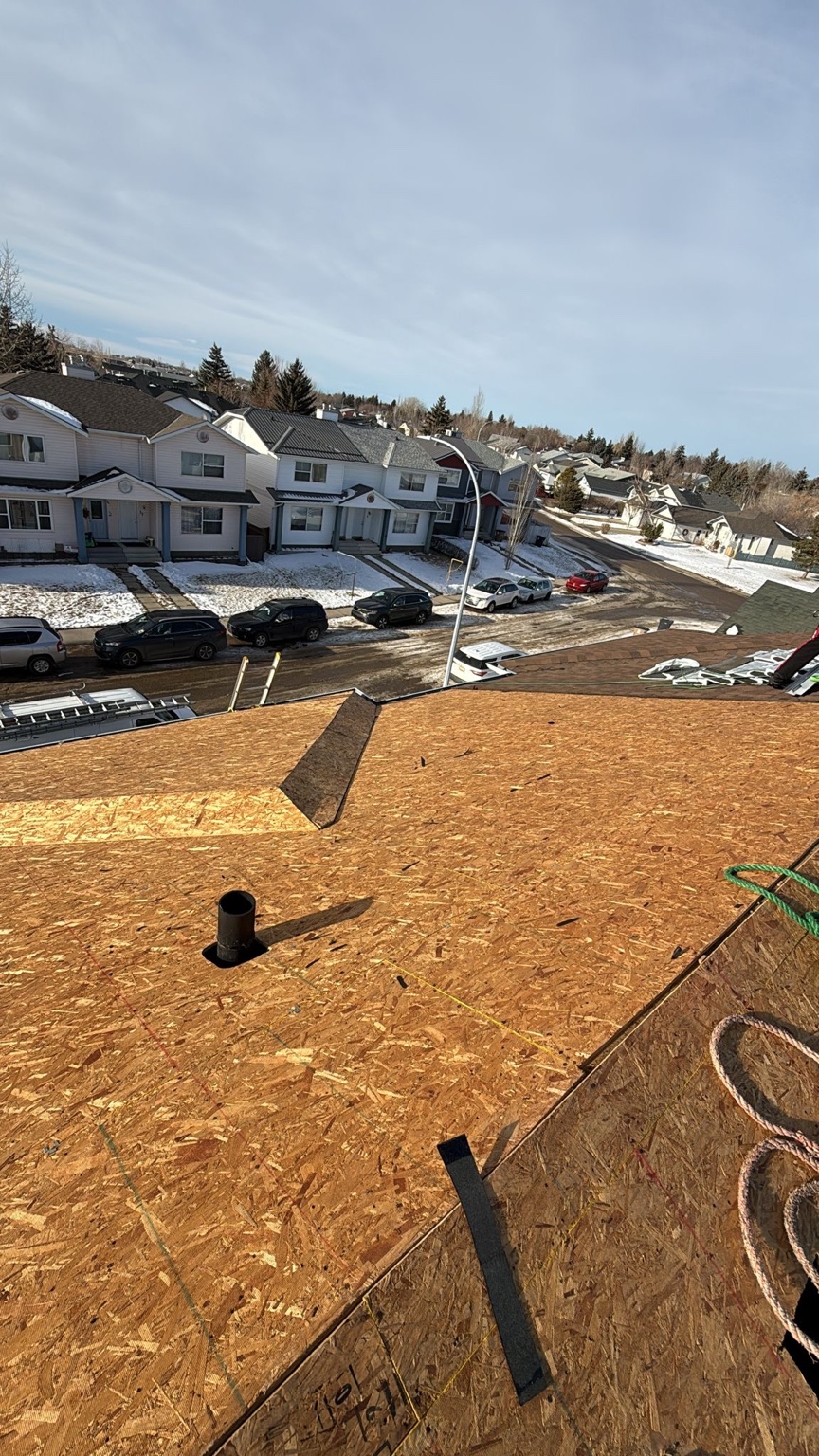
3. Hand-sealing asphalt shingles in cold weather
Most modern asphalt shingles contain factory-applied adhesive strips that bond adjacent shingle courses together when sufficiently warmed.
During Alberta's winter months, natural seal activation may take considerably longer.
To help protect shingles against wind uplift before natural sealing occurs, manufacturers recommend manual sealing under specified cold-weather conditions.
This procedure is commonly known as hand-sealing or hand-tabbing.
IKO and Malarkey provide different application directions, including the type, quantity and placement of approved roofing cement. Installers must follow the instructions for the exact product being installed.
Hand-sealing helps provide additional security while the roofing system awaits conditions suitable for natural adhesive activation.
It is an important consideration in Alberta communities exposed to strong winter winds and chinooks.

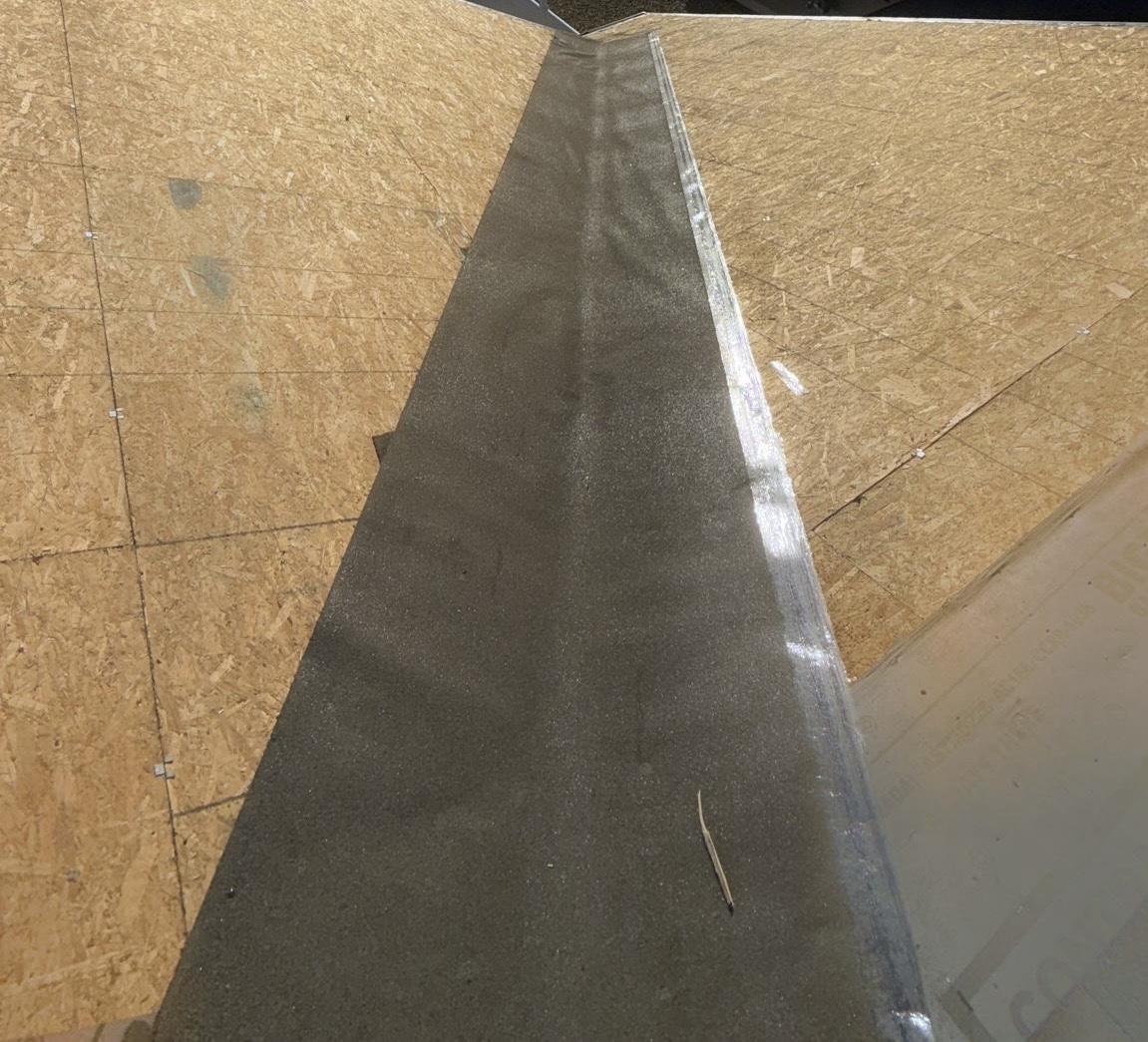
4. Ice and water protection during winter installation
Ice and water protection is an important component of a properly designed residential roofing system in Alberta.
During freeze-thaw cycles, melted snow can refreeze near colder roof edges, creating ice dams. Water may subsequently accumulate behind these dams and find its way beneath the shingles.
Protective membranes and correctly integrated flashing help reduce the risk of water entering vulnerable areas.
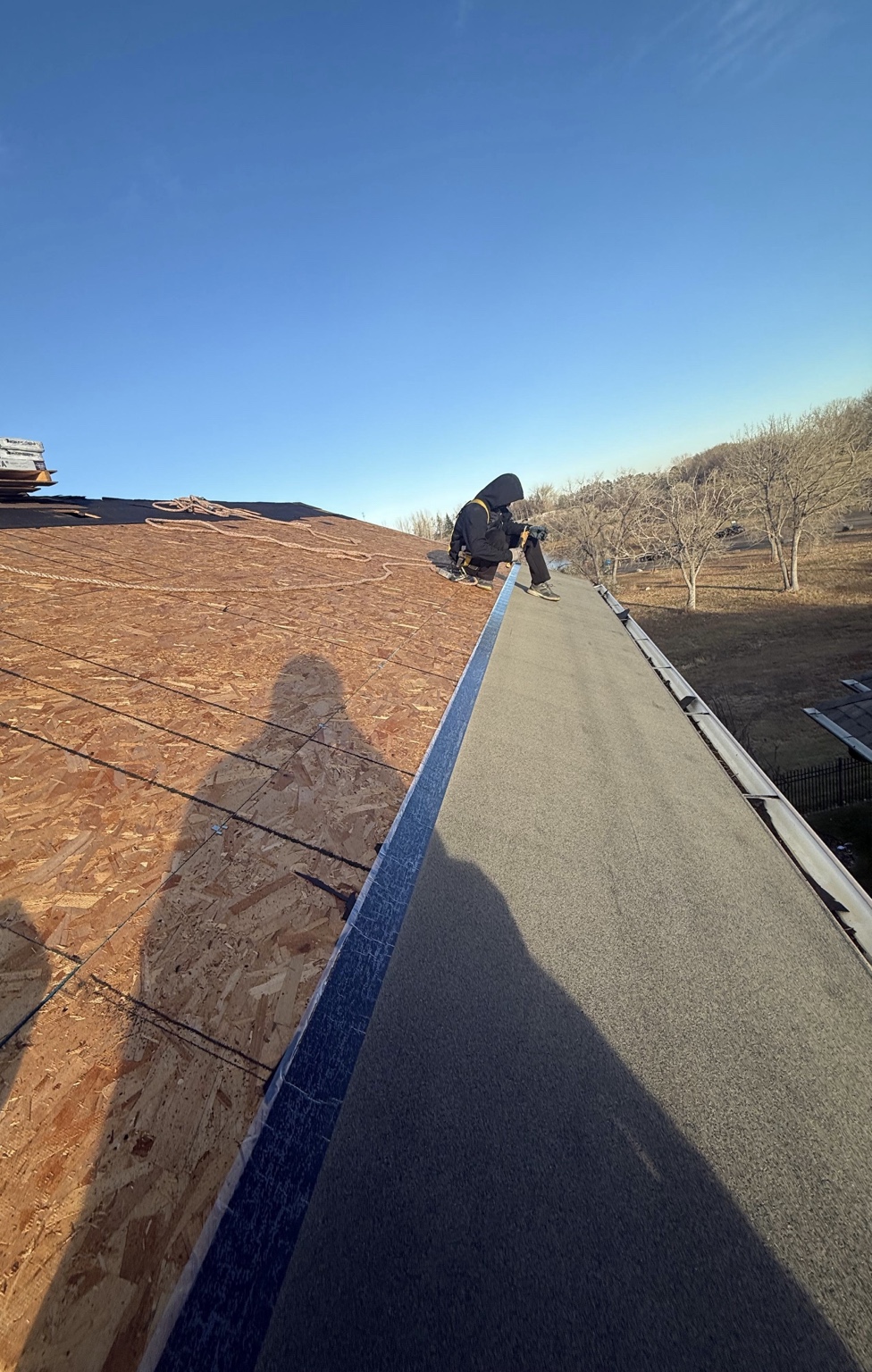
However, self-adhering membranes have their own installation requirements.
For example, Malarkey's Arctic Seal installation instructions identify 4°C and rising as favourable application conditions and caution against installation on surfaces affected by rain, snow, frost or ice.
A membrane's ability to perform in cold weather after installation does not mean it can be installed at any temperature.
The contractor must select compatible materials and follow their specific application requirements. Where acceptable installation conditions cannot be achieved, work should be postponed.
5. Correct fastening and nail placement
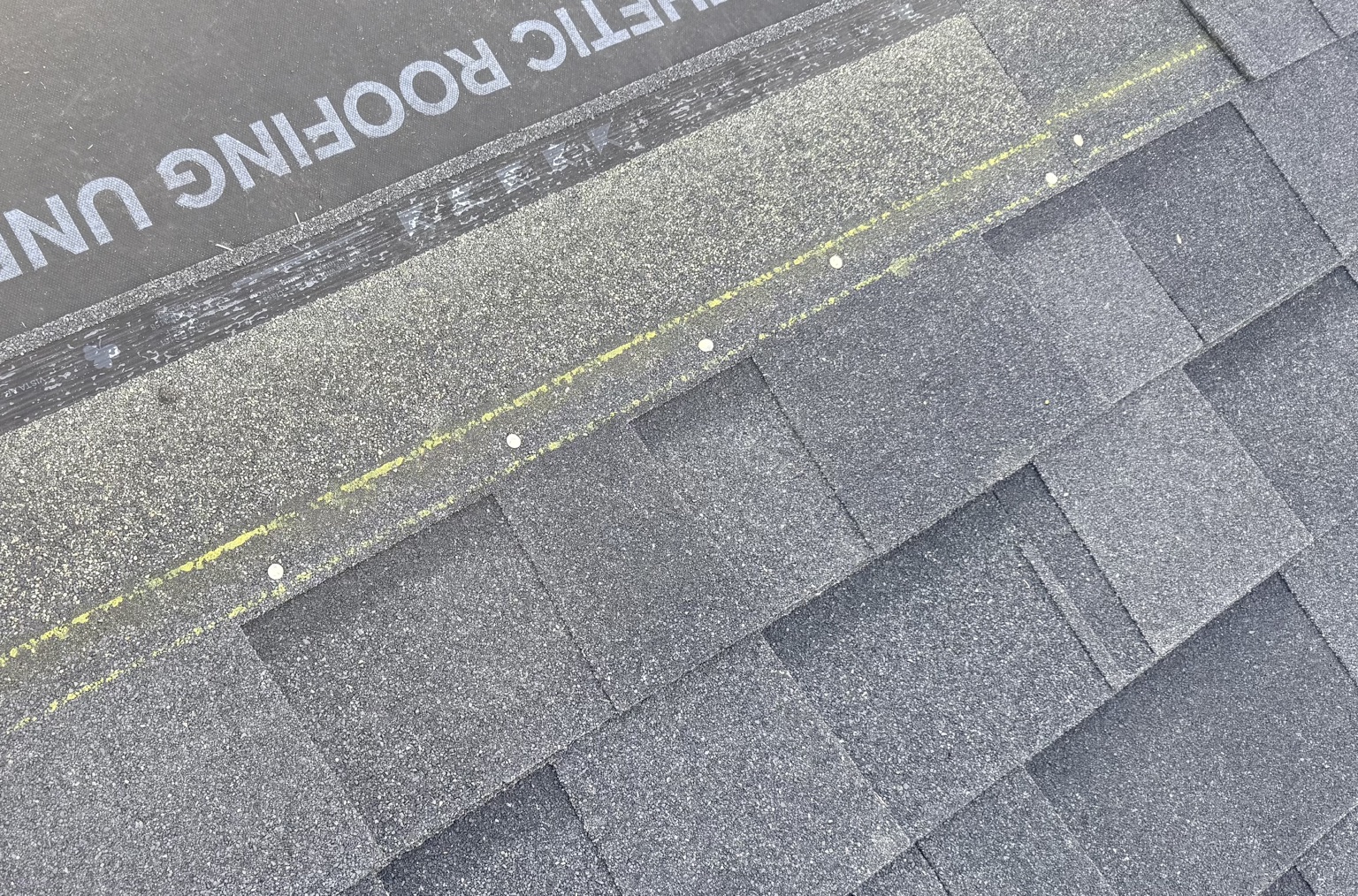
Cold-weather installation requires careful attention to roofing fasteners.
Shingles must sit properly against the decking before fastening. Improper nail placement or excessive driving pressure can damage the shingle and compromise its attachment.
A quality installation considers:
- Manufacturer-designated nailing zones.
- Approved corrosion-resistant roofing nails.
- Correct nail quantity and spacing.
- Proper fastener penetration.
- Adjustment of fastening equipment as working conditions change.
Adding more nails alone does not compensate for incorrect placement, inadequate sealing or unsuitable installation conditions.
6. Special attention to valleys, hips and ridge caps
Roof valleys, hips and ridges are particularly important during winter installation because these areas often require additional cutting, shaping and detailing.
Cold shingles can be damaged when forced into position without sufficient flexibility.
Malarkey's cold-weather bulletin identifies open metal valleys as a preferable option in cold conditions and recommends adequately warming hip and ridge materials before installation.
These finishing details contribute to effective water drainage and the long-term performance of your roofing system.
7. Attic ventilation, condensation and ice dams
Not every water stain appearing during winter is caused by damaged shingles.
The Alberta Allied Roofing Association highlights attic condensation as a common concern in Alberta homes, especially when temperatures rise following a prolonged cold period.
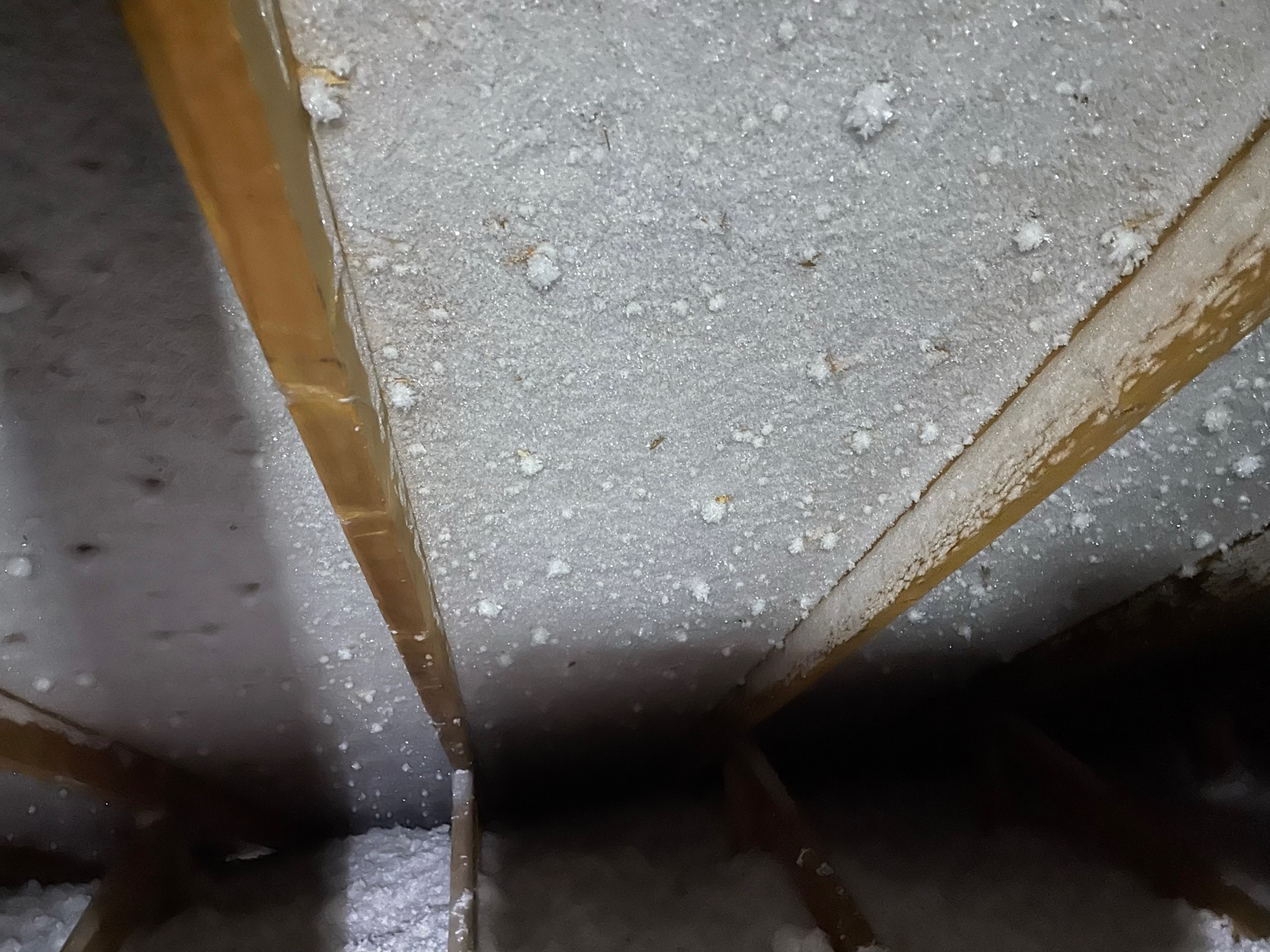
Warm, moisture-laden indoor air can enter a cold attic, freeze on surfaces and subsequently melt when the weather warms.
This condition is sometimes referred to as attic rain.
A proper assessment should consider attic ventilation, insulation, air leakage and the home's moisture levels alongside the condition of the exterior roof.
Replacing shingles alone may not resolve an underlying condensation problem.
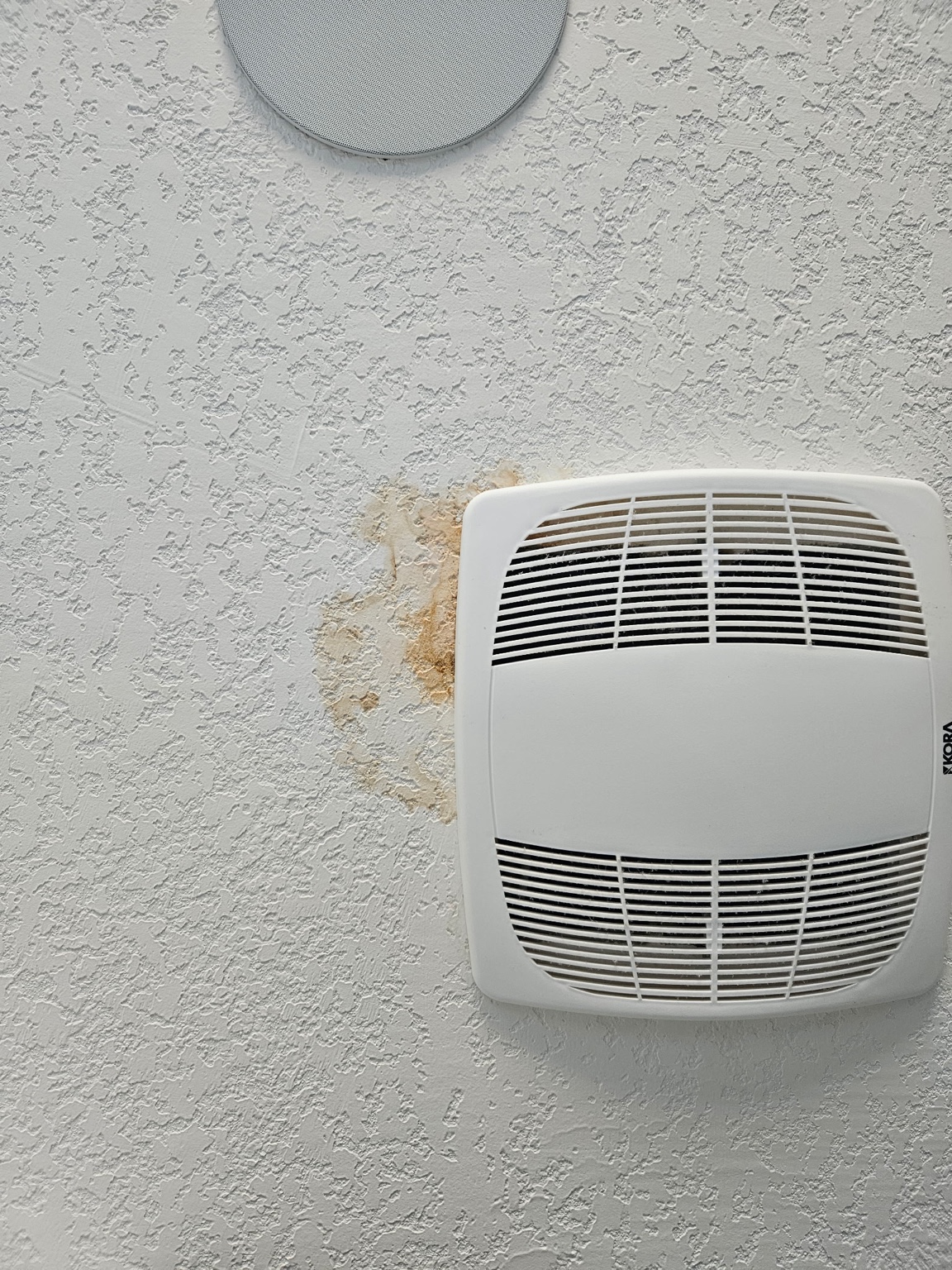
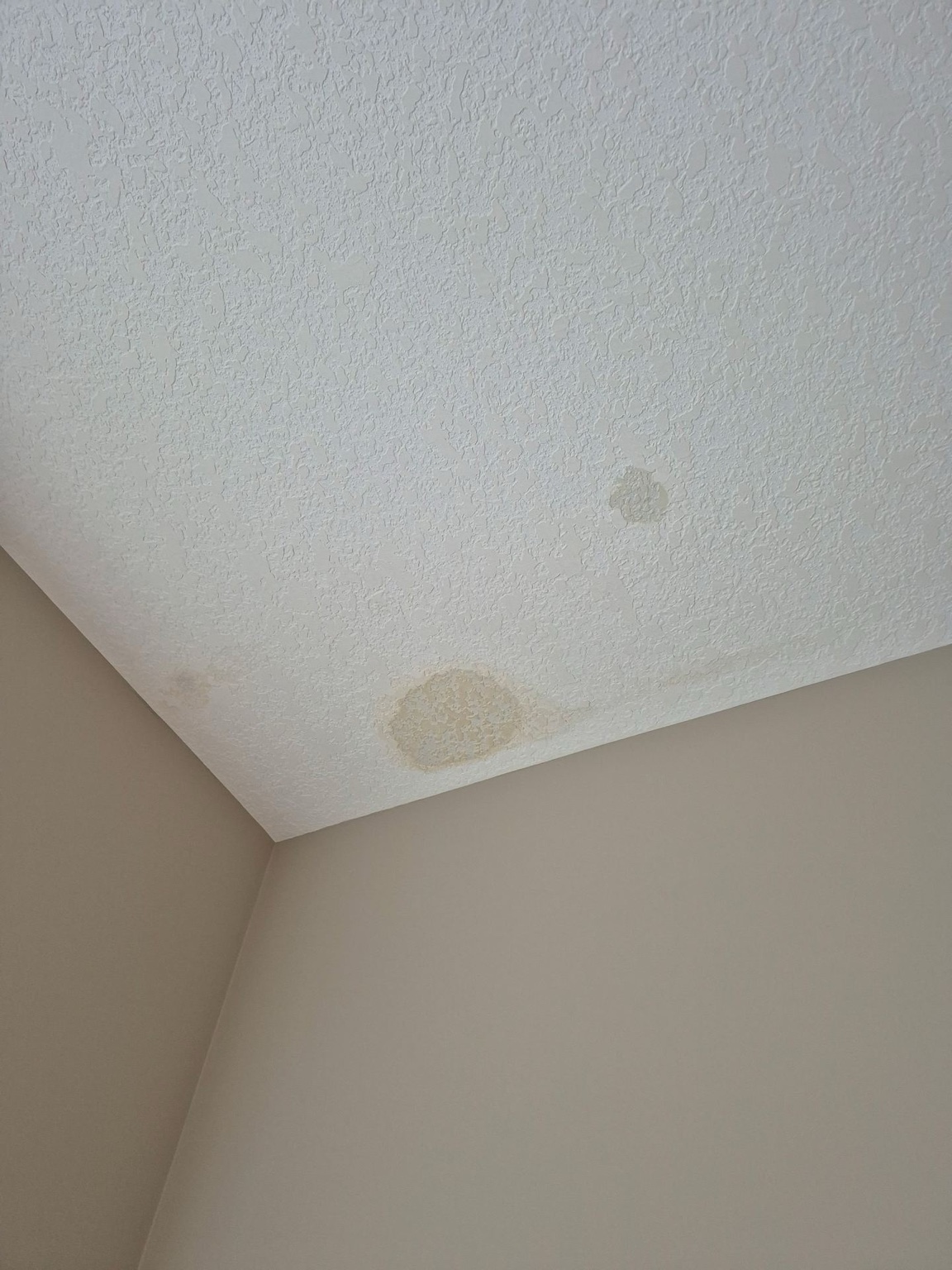
Ceiling staining alone does not establish whether moisture is caused by attic condensation or a roof leak. An inspection is needed to identify the source.
What does the Alberta Building Code say about roofing?
Roof replacements should comply with the applicable National Building Code — Alberta Edition, local requirements and the selected roofing manufacturer's installation instructions.
Relevant provisions in Division B, Part 9 include:
| Code subsection | Subject |
|---|---|
| 9.19 | Roof spaces and ventilation |
| 9.26.2 | Roofing materials and fasteners |
| 9.26.3 | Roof slopes |
| 9.26.4 | Flashing |
| 9.26.5 | Eave protection |
| 9.26.6 | Underlay beneath shingles |
| 9.26.7 | Asphalt shingles on slopes of 4:12 or greater |
| 9.26.8 | Asphalt shingles on slopes below 4:12 |
The Government of Alberta identifies the 2023 Alberta Edition, second printing (August 17, 2026), as the code in force. The subsection references above were reviewed against the first printing; consult the current adopted edition for exact requirements. A code subsection for lower slopes does not imply that asphalt shingles are suitable for every low-slope roof.
Building code compliance is the foundation of a quality installation. Manufacturer-specific requirements and appropriate cold-weather practices must also be considered.
When should winter roofing be postponed?
Even experienced roofing professionals must recognize when conditions are unsuitable.
A winter roofing project should be delayed when conditions prevent safe work or proper material application, such as:
- Unsafe ice or frost on working surfaces.
- Active snowfall or freezing rain.
- Hazardous wind conditions.
- Roofing materials that cannot be handled without damage.
- Unsuitable temperatures for required membranes or adhesives.
- Inability to keep the exposed roof protected.
Protecting your home should never come at the expense of safety or workmanship.
Frequently asked questions
Can asphalt shingles be installed below 0°C?
Potentially, depending on the selected roofing system, product instructions and site conditions. Every component, including membranes and adhesives, must be suitable for the conditions.
Will shingles installed in winter seal properly?
They can. Natural sealing may be delayed until sufficient warmth is available. Manufacturer-approved hand-sealing may be necessary to protect the shingles in the meantime.
Does winter installation void the manufacturer warranty?
Not automatically. Warranty eligibility depends on the specific manufacturer's terms and whether installation requirements have been followed. Certain wind-warranty protections depend on shingles being properly sealed.
Should I wait until spring to replace my roof?
If your roof remains functional, waiting for more favourable weather may be reasonable. If it is actively leaking or deteriorating, arranging a professional inspection is advisable before deciding to postpone replacement.
Can Class 4 shingles be installed in winter?
Yes, when the specific manufacturer's cold-weather instructions and all other applicable installation requirements can be satisfied. A Class 4 impact rating does not eliminate the need for cold-weather precautions.
Quality workmanship should never depend on the season
At Nova Clad Roofing & Exteriors, we believe that every homeowner deserves honest advice, careful preparation and quality workmanship, regardless of the season.
Whether your roof replacement takes place during a warm summer afternoon or a suitable winter weather window, the objective remains the same: protecting your home through thoughtful installation and attention to every detail.
Proudly serving Calgary, Edmonton, Red Deer and surrounding Alberta communities.
Care in Every Detail. Confidence Over Your Head.
Explore Our Roof Replacement Services
Technical references
- Alberta Allied Roofing Association — Homeowner Resources
- Alberta Roofing Contractors Association — Steep-Slope Roofing Standards
- IKO — Cold Weather Roofing Guidelines
- IKO — Residential Information Bulletin R-52
- IKO — Manual Sealing of Asphalt Shingles
- Malarkey — Cold Weather Shingle Installation Technical Bulletin
- Malarkey — Arctic Seal Installation Instructions
- Government of Alberta — Building Codes and Standards
This article is intended for homeowner education and does not replace applicable building codes, occupational health and safety requirements or product-specific installation instructions.
Planning a roof replacement?
Get an honest recommendation and a preliminary budget for your Alberta home.